|
|
|
 |
|
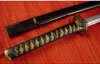
| Citadel Katana Super Yagu (CDK15) |
Points: 50
|
Light and easy to handle Katana thanks to its DNH7 steel blade with Bo Hi, built in Yamato style : the Shinogis are near the Mune which is shaped in bulb in the Kissaki.
Hand sharpened, hand polished DNH7 high carbon steel blade with true differential quenching.
Genuine white rayskin handle with black silk cord wrap.
Black finish handmade iron tsuba.
Black lacquer finish wood scabbard.
|
|
|
|
|
|
 |
|
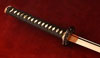
| Citadel Katana Super Yagu Plus (CDK5) |
Points: 50

|
Beautifull Shinto blade with grooves. DNH7 steel, hand forged on a charcoal bed. True selective clay temper.
Hand sharpened, hand polished DNH7 high carbon steel blade with true differential quenching.
Genuine white rayskin handle with black silk cord wrap.
Black finish handmade iron tsuba.
Black lacquer finish wood scabbard.
|
|
|
|
|
|
 |
|
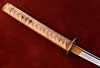
| Citadel Katana Special Waves (CDK6) |
Points: 50
|
Beautiful replica of a Shinto Katana. The decoration work is on the theme of waves and goes along with a strong, grooved blade.
Beautiful, well balanced, DNH7 steel Yamato blade forged with 3 hammers on a charcoal bed. True clay selective temper, as usual.
Hand sharpened, hand polished DNH7 high carbon steel blade with true differential quenching.
Genuine white rayskin handle with silk cord wrap.
Black finish handmade iron tsuba.
Black lacquer finish wood scabbard.
|
|
|
|
|
|
 |
|
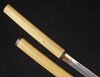
| Citadel Katana Shira Saya (CDK7) |
Points: 50
|
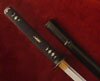
Strong grooved DNH7 steel blade forged with 3 hammers on a charcoal bed. Shinto style, Yamato type. Ji has a mat polish while Shinogi Ji has a "miror" polish.
Hand sharpened, hand polished DNH7 high carbon steel blade with true differential quenching.
Lacquer finish natural wood scabbard.
|
|
|
|
|
|
 |
|
| Citadel Katana Luxe Black (CDK8) |
Points: 50
|
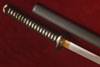
A Katana with a strong appearance thanks to the wide Mi haba of its DNH7 hand forged steel blade.
The structure of this beautiful blade is Yamato with a typical Shinto Sugata with nice proportions. True visible selective clay temper line, of course.
Hand sharpened, hand polished DNH7 high carbon steel blade with true differential quenching.
Genuine white rayskin handle with silk cord wrap.
Black finish handmade iron tsuba.
Black lacquer finish wood scabbard.
|
|
|
|
|
|
 |
|
| Citadel Katana Battodo (CDK9) |
Points: 50
|
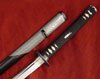
Specialy meant for cutting this katana is handy with enough inertia for an easy cutting.
Shinto style, very slightly curved, full blade with a well balanced Sugata. DNH7 steel hand forged with 3 hammers on a charcoal bed, true differential clay temper.
Hand sharpened, hand polished DNH7 high carbon steel blade with true differential quenching.
Genuine white rayskin handle with silk cord wrap.
Black finish handmade iron tsuba.
Black lacquer finish wood scabbard.
|
|
|
|
|
|
 |
|
| Citadel Katana Silver and Same (CDK10) |
Points: 50
|
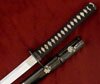
Beautiful Shinto style Katana well balanced with a reasonable weight.
All koshirae metal pieces are silver plated and Saya is partially covered with polished ray skin. All that gives to this sabre an elegant and serious looking.
Blade is build in Yamato style, little curved. DNH7 high carbon steel hand forged with 3 hammers on a charcoal bed. Bohi ends paralele to the point -as Japanese tradition orders. True selective clay tempering giving as usual a true and neat Hamon.
Hand sharpened, hand polished DNH7 high carbon steel blade with true differential quenching.
Genuine white rayskin handle with silk cord wrap.
Black finish handmade iron tsuba.
Black lacquer finish wood scabbard.
|
|
|
|
|
|
 |
|
| Citadel Katana Flowers Silver (CDK11) |
Points: 50
|
Powerful Katana with great decoration : silvered brass pieces, Saya with flowers, and engraved-sculpted Bamboo design on Tsuba and Fushi-Kashira.
Long blade handforged in DNH7 steel with 3 hammers on sharcoal bed. True selective temper made according the traditionnal process of clay quenshing and, thus true temper line, as usual.
Hand sharpened, hand polished DNH7 high carbon steel blade with true differential quenching.
Genuine white rayskin handle with silk cord wrap.
Black finish handmade iron tsuba.
Black lacquer finish wood scabbard.
|
|
|
|
|
|
 |
|
| Citadel Curly Katana Shira Saya (CDK12) |
Points: 50
|
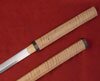
Beautiful Shira Saya made in curly wood.
Yamato blade, little curved, without grooves, hand forged with 3 hammers on a sharkoal bed.
Multipurpose blade good for Tameshigiri or Iaïdo.
Hand sharpened, hand polished DNH7 high carbon steel blade with true differential quenching.
Lacquer finish natural wood scabbard.
|
|
|
|
|
|
 |
|
| Citadel Katana Yoshi (CDK13) |
Points: 50
|
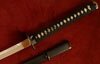
Beautifull Yamato style blade : High Shinogis and diamond point. Perfect for both Iaï and Battodo with an ideal weight.
Dnh7 steel hand forged with three hammers on sharcoal bed.
Hand sharpened, hand polished DNH7 high carbon steel blade with true differential quenching.
Genuine white rayskin handle with silk cord wrap.
Black finish handmade iron tsuba.
Black lacquer finish wood scabbard.
|
|
|
|
|
|
 |
|
| Citadel Katana Super Yoshi (CDK14) |
Points: 50
|
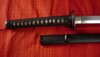
Beautifull Koto style blade.
Dnh7 steel hand forged with three hammers on sharcoal bed.
Hand sharpened, hand polished DNH7 high carbon steel blade with true differential quenching.
Genuine white rayskin handle with silk cord wrap.
Black finish handmade iron tsuba.
Black lacquer finish wood scabbard.
|
|
|
|
|
|
 |
|
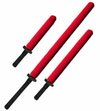
| Practical foam sword blue - chanbara sword |
Points: 2
|
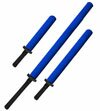
Light foam sword allows you to safely practice your full contact sparring.
Available in three sizes:
long - single hand sword or katana(choken)
medium - dagger or wakizashi(kodachi)
short - knife or tanto
We offer also long weapons: spear or naginata, long staff or bo staff. Remember to wear eye/head protectors when practicing.
|
|
|
|
|
|
 |
|
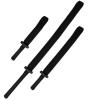
| Practical foam sword red - chanbara sword |
Points: 2
|
Light foam sword allows you to safely practice your full contact sparring.
Available in three sizes:
long - single hand sword or katana(choken)
medium - dagger or wakizashi(kodachi)
short - knife or tanto
We offer also long weapons: spear or naginata, long staff or bo staff. Remember to wear eye/head protectors when practicing.
|
|
|
|
|
|
 |
|
| Practical foam sword - chanbara sword |
Points: 2
|
Light foam sword allows you to safely practice your full contact sparring.
Available in three sizes:
long - single hand sword or katana(choken)
medium - dagger or wakizashi(kodachi)
short - knife or tanto
We offer also long weapons: spear or naginata, long staff or bo staff. Remember to wear eye/head protectors when practicing.
|
|
|
|
|
|
 |
|
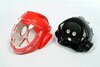
| PU Head Guars Black with mask |
Points: 5
|
Designed to protect head during fight with partner in sports like taekwondo, karate, kick boxing or for sparrings with use of light foam weapons.
We offer also long and short weapons: spear or naginata, long staff or bo staff, sword or katana, dagger or wakizashi, knife or tanto. Remember to wear eye/head protectors when practicing.
|
|
|
|
|
|
|
|
Tags:
martial arts, katana, iaito, sword, fencing, tonfa, boken, bokken, kama, shinai, samuraj, judo, karate, kenjutsu, kenjitsu, ninja, kungfu,
|



 - New items
 - Clearance sale
 - Discounted items
 - Add to favorites