|
|
|
PRODUCTS MANUFACTURED BY:
|
|
|
|
|
|
|
|
|
|
|
 |
|
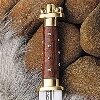
| Seax knife (401022) |
Points: 11

|
The seax, or sax, was universal in Northern Europe. Carried and used by the Saxons, Angles, Vikings and German tribes, its use probably dated before the fall of Rome and continued on into the early Middle Ages. From small knives with 3-4 inch blades to actual swords with blades of 27-28 inches and always single-edged, the profile of the seax varied a great deal. The original version of this large knife served from camp work to cutting work, on shipboard, and for fighting if a sword or axe was not available. The lobed pommel and guard are brass, and the wood grip is studded with brass tacks, for a very secure and comfortable grip. The blade is etched on both sides, flat ground, and capable of taking and holding a razor sharp edge. Leather sheath riveted and laced like the originals, has two thong slots. The remnants of this Seax can be seen in the British Museum. Made by Windlass Steelcrafts®.
|
|
|
|
|
|
 |
|
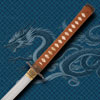
| Shogun Kiji Katana Windlass (501875) |
Points: 12

|
Handcrafted in a small town nestled in the Longquan mountains of China’s Zhejiang province, this sword embodies a 2,000-year legacy of skilled swordmaking. Every component is expertly crafted by highly skilled smiths using centuries-old methods.
|
|
|
|
|
|
 |
|
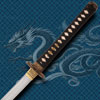
| Shogun Ryū Tatsu Katana Windlass (501874) |
Points: 12
|
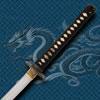
The blade is forged from 1095 high carbon steel and undergoes differential clay tempering using traditional techniques. This results in a spine with a Rockwell hardness of 45-48 HRC and a harder cutting edge at 56-58 HRC. This ancient tempering method creates the distinctive hamon, the visible temper line left when the clay is removed. Each blade is meticulously honed and must cleanly slice through a sheet of paper before leaving the workshop.
|
|
|
|
|
|
 |
|
| Shogun Tsuru Katana Windlass (501873) |
Points: 12
|
The blade is forged from 1095 high carbon steel and differentially clay-tempered using traditional techniques. This results in a spine with a Rockwell hardness of 45-48 HRC and a harder cutting edge at 56-58 HRC. This ancient tempering method creates the distinctive hamon, the visible line left when the clay is removed. Each blade is meticulously honed and must cleanly slice through a sheet of paper before leaving the workshop.
|
|
|
|
|
|
 |
|
| Soldier’s Buckler Battlecry (300501) |
Points: 2
|
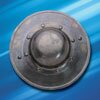
This Soldier’s Buckler is from Windlass Steelcrafts Battlecry collection. Designed specifically to be used and made from 1065 high carbon steel with a darkened, battle-hardened finish and tempering to a low 50's RC. This fist shield has gone through rigorous testing.
The hands-on nature of the manufacturing by master smiths makes this line unique. Includes custom packaging and certificate of authenticity signed by each smith that touched your shield through every step of the forging process.
|
|
|
|
|
|
 |
|
| Spiculus Gladius Windlass (501782) |
Points: 10
|
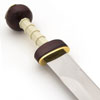
We've designed this gladius to be true to the period, yet worthy of a champion (of course, a plain gladius was the sword carried by all rank-and-file legionnaires). The high-carbon steel blade is extra-long – 24 inches – for extended reach in the critical moments of mortal combat. Despite its added length, this sword still weighs under 2 lbs and feels light and exceptionally lively in the hand.
|
|
|
|
|
|
 |
|
| Stiklestad Viking Sword Windlass |
Points: 12
|
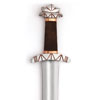
Stiklestad Viking Sword is made of high carbon steel and is beautifully balanced and highly effective weapon. Capable of both cutting and thrusting, it is also a delight to the eye. Pommel and guard are tastefully decorated with copper. Leather covered wood grip.
|
|
|
|
|
|
 |
|
| The Christus Imperat Rapier Windlass |
Points: 20
|
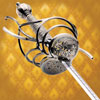
A rapier of this identical form and proportions is currently housed in The Royal Armouries (formerly the Tower of London). The flamboyantly formed hilt is both beautiful and functional. Its' forward plates are pierced and show lavish birds among foliage, while the bars of the guard are slender both defending the hand and having an upward loop to catch an opponent’s blade.
|
|
|
|
|
|
 |
|
| War Sword Windlass |
Points: 15
|
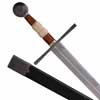
This versatile large sword was a staple throughout medieval Europe, designed for both one-handed agility and powerful two-handed strikes. Crafted with a well-tempered high carbon steel blade, this sword offers exceptional durability and cutting power.
|
|
|
|
|
|
 |
|
| Windlass British 1796 Heavy Cavalry Saber (501868s) |
Points: 10
|
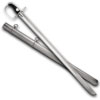
The Austrian-designed British heavy cavalry sword of 1796 was used by British heavy cavalry units during the Napoleonic Wars. It was criticized for being unwieldy in combat, but was considered a powerful cutting weapon.
|
|
|
|
|
|
 |
|
| Windlass British 1796 Pattern Light Cavalry Saber (501836s) |
Points: 10
|
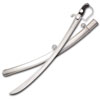
This exact replica of an original antique weighs only 1 lb, 12 oz, and the blade features an extreme distal taper, enabling it to feel exceptionally lively. A full 5/8″ thick at the hilt, and tapers to a super thin 1/64″, 1″ from the tip. The blade is hand forged from tough 1080 high carbon steel and spring tempered and arrives fully sharpened.
|
|
|
|
|
|
 |
|
| Windlass Classic Medieval Sword (500020s) |
Points: 16
|
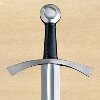
Sword is an Oakeshott Type X with a Type I pommel and a Type VII crossguard. The long and wide fuller on this blade lightens the overall sword and make it possible to deliver fast and shearing cuts, capable of cutting through the mail and padding that were worn during the period. The long guard offers good protection from an opponent's shield or blade, while the classic wheel pommel brings the sword very nicely into balance. This type of sword was in service for a long period of time throughout all of Europe. Made by Windlass Steelcrafts.
|
|
|
|
|
|
 |
|
| Windlass French Napoleonic Briquet Short Sword (501867) |
Points: 10
|
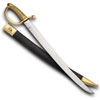
This short saber was introduced in 1767, preceding the French Revolution, as a replacement for heavier and cumbersome swords like the fusilier’s ēpēe. It was instantly derided for its modest dimensions and nicknamed “Briquet” (”fire lighter”) and the name stuck and became official in 1806.
|
|
|
|
|
|
 |
|
| Windlass Heavy Cavalry Saber 1840 (501150s) |
Points: 10
|
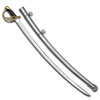
This historically accurate saber was well known as the “Wrist Breaker”. The model 1840 Cavalry Saber has a three branch brass guard, brass wire wrapped black leather grip.
|
|
|
|
|
|
|
Tags:
martial arts, katana, iaito, sword, fencing, tonfa, boken, bokken, kama, shinai, samuraj, judo, karate, kenjutsu, kenjitsu, ninja, kungfu,
|



 - Clearance sale
 - Discounted items
 - Add to favorites